Skip to content
Yes, tilapia is a kosher fish. According to kashrut, the body of Jewish dietary laws, a fish is considered kosher if it has two specific physical characteristics: fins and easily removable scales.
Tilapia possesses both of these essential features, placing it firmly in the category of kosher fish alongside species like salmon and tuna.
This makes it a widely accepted and commonly consumed fish within communities that observe kosher dietary guidelines, provided it is prepared with other kosher ingredients.
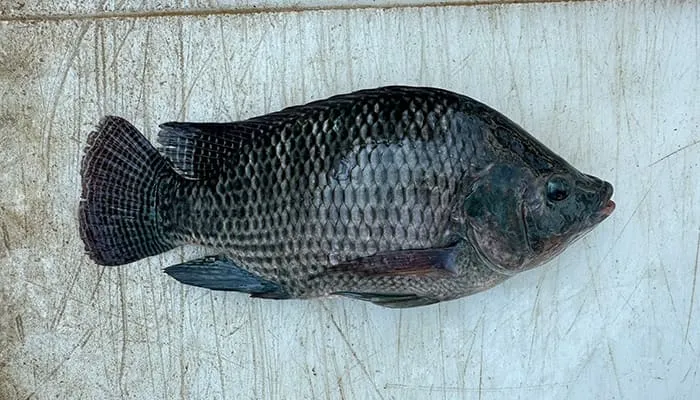
What is a kosher fish?
A kosher fish is one that complies with Jewish dietary laws (kashrut).To be classified as kosher, a fish must have both fins and easily removable scales. This includes common species like salmon, tuna, cod, and trout.
Fish that lack both of these characteristics, such as catfish and eels, or have scales that are not easily removed, like sturgeon, are not kosher. All shellfish, including shrimp and lobster, are also prohibited as they lack these required features.
Is Kosher Tilapia Fish Healthy?
Yes, kosher tilapia is a healthy fish choice. It is a valuable source of lean protein, low in total fat, and provides essential nutrients like vitamin B12, niacin, and selenium.
The “kosher” certification ensures the fish has fins and scales, adhering to Jewish dietary law, but this does not change its nutritional profile.
Key nutritional aspects of tilapia include:
- Lean Protein: Supports muscle maintenance and metabolic function.
- Essential Nutrients: A good source of vitamin B12, phosphorus, and selenium.
- Fatty Acid Ratio: Contains a higher concentration of omega-6 than omega-3 fatty acids.
How to tell if fish are kosher?
To be considered kosher, a fish must have both fins and scales. The scales must be the type that can be easily removed from the skin without tearing it (ctenoid or cycloid scales).
Common examples of kosher fish include salmon, tuna, and cod. Fish that lack one or both of these features, such as catfish (no scales), shark (no true scales), and all shellfish (like shrimp and lobster), are not kosher.
To verify if a fish is kosher, follow this identification process:
- Identify Fins: Visually confirm the presence of fins on the fish’s body.
- Identify Scales: Ensure the fish is covered in scales that are visible to the naked eye.
- Verify Scale Type: The scales must be easily scraped off without damaging the underlying skin. Fish like sturgeon, which have non-removable scutes or bony plates, are not kosher.

Tilapia Kosher; Why Does It Need Kosher Certification?
It requires kosher certification to guarantee this status is maintained throughout the supply chain.
This certification verifies that the fish has not been processed on equipment used for non-kosher items, such as shellfish, which would cause cross-contamination.
It also ensures any additives or glazes applied to the fish are certified kosher, confirming the final product’s integrity for the consumer.
A kosher certification agency verifies key stages of processing:
- Dedicated Equipment: Confirms that knives, filleting tables, and machinery are not shared with non-kosher species like catfish or shrimp.
- Kosher Additives: Ensures that any preservatives, oils, or coatings used are certified kosher.
- Contamination-Free Handling: Guarantees the process from filleting to packaging prevents contact with non-kosher products.

Example of Fish with Kosher Certification
Yanghua Fishery is proud to produce kosher-certified tilapia. Our fish meets strict kosher requirements, ensuring safety for diverse consumer groups.
Our entire production process adheres to rigorous standards, guaranteeing that our tilapia is both healthy and safe for consumption.
Conclusion
While fish is often considered kosher, certification is vital to affirm its compliance, build trust, and enhance market competitiveness under Jewish dietary laws.
Choosing kosher-certified products, like tilapia from Yanghua Fishery in China, assures consumers of a safe and compliant choice.
FAQs
Q1: Is tilapia skin kosher?
A: Yes. All true species of tilapia, including the common red, black, Nile, and Mozambique varieties, have both fins and kosher scales, making them all acceptable.
Q2: Do fish need to be ritually slaughtered to be kosher?
A: No. Unlike meat from mammals and birds, fish do not require ritual slaughter (shechita). As long as they are a kosher species, their kosher status is inherent.
Q3: What makes a fish like catfish not kosher?
A: Catfish is not kosher because it lacks the second, critical sign: scales. While it has fins, its smooth skin disqualifies it according to the laws of kashrut.